Search This Blog

Tuesday, April 12, 2011

Men in the Sun and Other Palestinian Stories

While reading Men in the Sun and Other Palestinian Stories, I found the story very moving and wished to look further into the author Ghassan Kanafani.  


Ghassan Kanafani was born in Palestine in 1936.  We was a popular Palestinian writer and a leading member of the Popular Front for the Liberation of Palestine.   He is considered a major moderining force in Arab literature.  Kanafani focused primarily on the short story.  It appears that writing was an outlet for him to convey his political and cultural aspects.  Like much of the Palestinians over the past 60 years their lives have been in limbo and often have resulted in violent actions.   His polotical involment with the PFLP would lead to his assassination by Israel in retaliation for a prior terror attack.  Unlike the other works and authors this blog has followed, Kanafani works and life are much more rooted in violence and speak of a struggle which violence is used as a tool.

Sunday, April 10, 2011

Azalea Festival

This weekend, April 6-10, 2011, was the Azalea Festival in Wilmington, NC.  I attended this event on Saturday and Sunday.   There was an art show, shag dance competition, and Street Fair.

The shag dancing competition was very interesting.  This was my first time experiencing such an event and witnessing shag dancing. 

Wilmington was packed with people, one account was that over 400,000 people visited the city during the Festival.


The Festival was a prime example of Old South Tradition melded with a New South Atmosphere, the art show was a prime example of this mess of cultures and featured many different styles and genres.

Friday, April 1, 2011

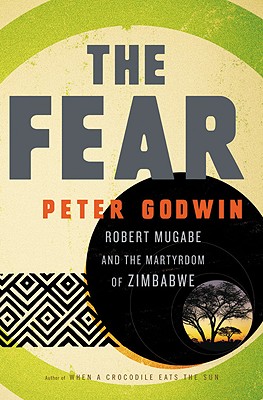
Peter Godwin Book Talk

Peter Godwin was born and grew up in Rhodesia, present day Zimbabwe.  He spoke about his new book, The Fear and about his experiences with over the past thirty years in Zimbabwe. 

The Fear by Peter Godwin,  is about the recent elections in Zimbabwe and Mugabe's battle to impose his will on the voting public. The name of the book comes from what Zimbabweans called the period between the two elections.  In the first Mugabe lost and before the second the ruling party used any method possible to 'convince' people the change their votes.  The Fear refers to the torture, random beatings and repression that came to anyone suspected of having voted for the opposition party.

Godwin has been banned from Zimbabwe since 1983 but has found ways to cover the current issues.  His family still lives in the country.  Godwin is a prime example of current authors who are pushing the limits in order to tell a story which is attempted to be muted but those that repress people.  

Mugabe a former national hero, has now placed the country in a state of continues Fear. 

Tuesday, March 22, 2011

The God of Small Things

The God of Small Things by Arundhati Roy tells the story of one family in the town of Ayemenem in Kerala, India. Roy's style leads to a fractured story where the the time line is hard to follow.    The author focus of the items of the society, sex, love, trust and family which are often not discussed.  The novel is filled with scandal, the scandals end up define the characters. 

This book and the authors style is something that you are going to either love or hate.  There is no middle ground.  For me the novel is some thing I did not personally enjoy reading but it's stories are something I realize take place and I am glad that by reading it I am more informed on the modern issues of the caste system, women and the under represented in India. 

Tuesday, March 15, 2011

Hotel Rwanda

Today I re-watched Hotel Rwanda. The film is even more powerful than I had remembered.  The amount violence that took place.  The fact that even a small amount of lives that could be saved is extraordinary but at the same time very scary.  The movie shows just a glimpse of the violence that took place. 

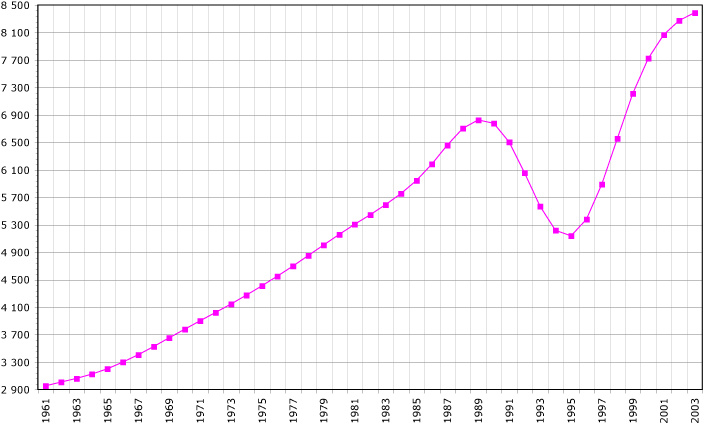
I did just a small amount of research on the actual genocide. The below graph shows the large dip in the population.  This tend is very unsettling that in a short period of time so many people could be killed.

Graph showing the population of Rwanda from 1961 to 2003. (Data from U.N. Food and Agriculture Organization)

Sunday, March 13, 2011

Spring Awakening


Spring Awakening, which is based on the 1891 German play Frühlings Erwachen by Frank Wedekind (1864-1918). Wedekind’s controversial coming-of-age story was originally banned because of its frank depiction of teenage sexuality, rape, child abuse, abortion, and suicide.

The Musical is very moving and presented very well.  It pushes the limits and contains many instance of sexuality and nudity.  These aspects are very well done and artistic.  Set in late-19th century Germany, it concerns teenagers who are discovering the inner and outer tumult of sexuality.

The teenagers show how powerful of a toll it can take on youth when adults withhold information about sexuality. 

Tuesday, March 1, 2011

What Is the What

What Is the What: The Autobiography of Valentino Achak Deng by Dave Eggers.

The life story of Valentino Achak Deng is powerful and follows the Sudanese refugee and member of the Lost Boys of Sudan program.  It is mind blowing at what lengths Deng went to in order to improve his and attempt to save his own life.  While reading the book it is impossible to think that this is merely one of thousands of stories that could have been told. 

Sudan is one of the modern day places where genocide has taken place.   The rest of the world turned its back on the atrocities as they were taken place and only have responded in limited action.  It is hard to think that these horrible  events can take place and the major powers do very little.   Eggers tackled this subject and has succeeded in telling a much needed story.

Tuesday, February 22, 2011

Gandhi

Gandhi's non-violence speech from the film is moving.  It is clear that non-violent means of civil disobedience are effective, but are only effective when the side in which the disobedience is directed is  not willing to commit great atrocities.  If the target is willing to commit atrocities and kill and loot the people then these non-violent means would only lead to genocide. 


TALGS conference

I attended and volunteered at the annual TALGS conference which took place this past Saturday at ECU.  Before attending this conference I was unaware that it was a Linguistics conference and primarily focused for teachers and program managers of English as a second language.  The keynote speaker, , Dr. Ofelia García, gave an interesting lecture on the teaching of recent immigrant children in New York Schools and the best way to go about teaching them have success in teaching English.  The first focused on different language education policies and how they have changed over time.  The conference and keynote lecture in particular were instructing and eyeopening.

Tuesday, February 15, 2011

A Distant Shore

A Distant Shore by Caryl Phillips 

Phillips' "A Distant Shore" examines the lives of two people, Dorothy and Solomon, who never fully connect with each other or the world around them.  Dorothy has lived a very unsatisfying life and her move to Stoneleigh highlights to her all the misery she has lived.  Solomon who has changed his name from Gabriel has escaped from his home African country after the the massacre of his family. 
 As large part of the story focus on Solomon/Gabriel journy from Africa to his home in Stoneleigh.

The most moving part of the story is one that is only told through the actions of  Dorothy and Solomon.  Both are very lonely and have lived lives which they couldn't possible have expected.  They clearly connect with each other but are unable to fully open up to each other.  All of their loses do not allow them to come close enough to each other and eventually lead to their downfall. 


NPR interview with Caryl Phillips

Tuesday, February 8, 2011

Nobel Speech by Naipaul

Naipaul is a very interesting character.  In his Nobel Lecture given on the 7th December 2001 Naipaul outlines his journey through his career and also his views on life and writing.  His writing is clearly rooted in his past, "When I became a writer those areas of darkness around me as a child became my subjects.".  His use of areas of darkness is clearing a reference to Conrad.  Naipaul's views of these areas is one that is not fully held by others.  He is often critical of areas which he views as being shadowed in darkness.  His views are that the people that are in these areas are just as responsible for raising themselves to a better potion.  Naipauls examinations of his motives shows that he often is with out plan and goes where his life and writing guide him, often these are to areas throughout the world.

Tuesday, February 1, 2011

The Intended

David Dabydeen's novel, The Intended, is clearly autobiographical.  Dabydeen examines how immigrants from British colonies often led a messy life once they come to the 'motherland'.  They are not fully accepted into English society and are forced to live on the fringe of society. The idea that in Britain "everyone who is not White is Black" flows though the work. The boys in the novel unite in to a family.  They do not always get along but they rely on each other for support.  The narrator's school friends, Nasim, Shaz, and Patel are described as "the regrouping of the Asian diaspora in a South London schoolyard".  It is clear that the boys struggle to determine their identity.  This struggle at such an impressionable age would greatly effect an individual.  Dabydeen representation of each of the boys struggles shows how people who identify each other often express their feelings and struggle differently. 

The following charts highlight the ethnicity of the English and how its changing
2007 ethnicity of the English population

The change in England's ethnic minority population (2001 - 2007)

Tuesday, January 25, 2011

A Very Old Man with Enormous Wings

While reading "A Very Old Man with Enormous Wings" it made me think of how easily people are manipulated in our world.  The story story makes the clear point that it is easy and sometimes even by change that people are able to keep the weak down.  All to often groups of people use power to be cruel to others.  Power is often a relative aspect that even when people are themselves being oppressed they will turn and oppress others.  It is clear in the story that the family cares little fore the Old Man and is only interested in him when they can make a profit.  They share none of their recently gained wealth with him even though he is the reason they have achieved it.  Today even though in many ways aspects have improved there are still many people that are being oppressed.  It is important for us to remember when we see some one or thing different that we react in a human way and seek to not only understand it but also provide compassion.  

Tuesday, January 18, 2011

Things Fall Apart Revisited

While reading Things Fall Apart for the third time, I read it in High School and College, I came across a recent article about Nigeria by Chinua Achebe. In this article Achebe speaks to many of the modern problems which many post-colonial nations are dealing with.  Achebe looks at colonialism though a long historical perspective and does not use it as an excuse to why, in this example Nigeria is rife with problems but rather an reason to be examined in order to develop methods to solve the problems which colonialism created.